National Treasure

Cooling Off
納涼図屏風
Paintings · Edo, 17th centuryTNM
Home › Browse › Paintings › Edo period › Amusements under the Blossoms

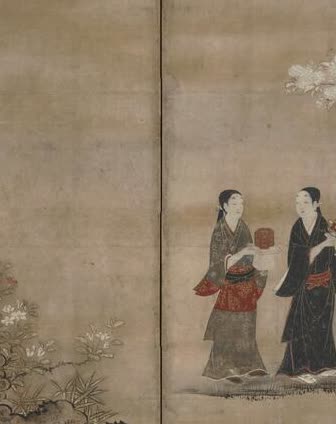
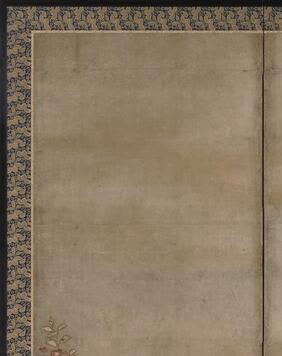
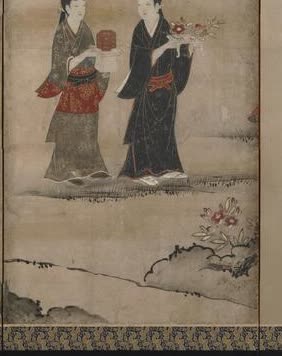
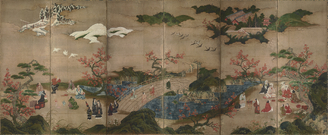
These folding screens depict a scene of cherry blossom viewing from around 400 years ago, when the Azuchi-Momoyama period was drawing to a close and the Edo period was just beginning. A spring party unfurls across a space partitioned off by large curtains. The right-hand screen depicts double-flowered cherry trees in full bloom. Some ladies sit around culinary treats under these trees. We can almost hear the hand-clapping and cheerful singing that accompanies the sounds of the shamisen. This is what an outdoor get-together of women probably looked like about 400 years ago. On the left-hand screen, several people sit on the veranda of an octagonal structure beneath the white blossoms of aronia trees. They gaze down on the dancing figures below. We can also see a waiting palanquin bearer dozing beneath the veranda. The central figure at the party must be someone of fairly high social standing. The protagonist is actually the child on the veranda wearing a red kimono and holding a fan. Women dance playfully before her eyes. The beauties in the center are garbed in the latest fashions of the day. Their eyes are sharply outlined and a closer look reveals black pupils inside the deep brown of the irises, while light black ink has been applied to the inner and outer corners of the eyes to give them a three-dimensional aspect. The women on the right are dressed as men, complete with swords hung around their waists. They are probably performing a fashionable dance known as Okuni Kabuki. The depiction of the dancer with the sole of her foot on display almost seems like a work of stop motion animation.
The women on the veranda have also kicked their feet up, as if swept away by the rhythm. The painting presents a snapshot of people enjoying the cherry blossoms. It splendidly captures the Japanese love of the seasons and joyful appreciation of spring. This powerful work entrances the modern-day viewer and makes us want to sing and dance, too. Unfortunately, the two center panels of the right-hand screen were destroyed during the Great Kanto Earthquake in 1923. Nowadays, the painting in its entirety can only be seen through black-and-white photographs. For centuries, Japanese paintings depicted Buddhist gods, popular tales, nature, and elite figures such as nobles and samurai. The painting on display reflects a major shift in Japanese art about 400 years ago — a growing fascination with everyday people. The painting shows people celebrating spring, a season associated with vitality and renewal. On the right screen, women picnic and play music beneath a blooming cherry tree. (The two blank panels were destroyed in the Great Kantō Earthquake of 1923.) On the left screen, women dressed in men’s clothing brandish swords as they perform Okuni Kabuki, a dance popularized by the cross-dressing entertainer and shrine attendant Izumo no Okuni. These screens capture the latest customs and fashions of the time while also reflecting Japan’s enduring love of the four seasons. They were likely created by Kanō Naganobu (1577–1654), a master painter in service to Tokugawa Ieyasu, the samurai warlord who unified Japan.
— Museum description: Tokyo National Museum (CC BY 4.0), via ColBase / Japan Search.