National Treasure
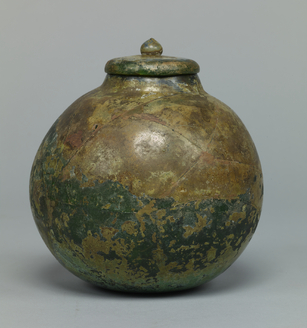
Cinerary Urn
瑠璃骨壺
Archaeological Objects · Asuka, 707TNM
Home › Browse › Archaeological Objects › Nanbokuchō period › Celadon Bowl with carved lotus petals
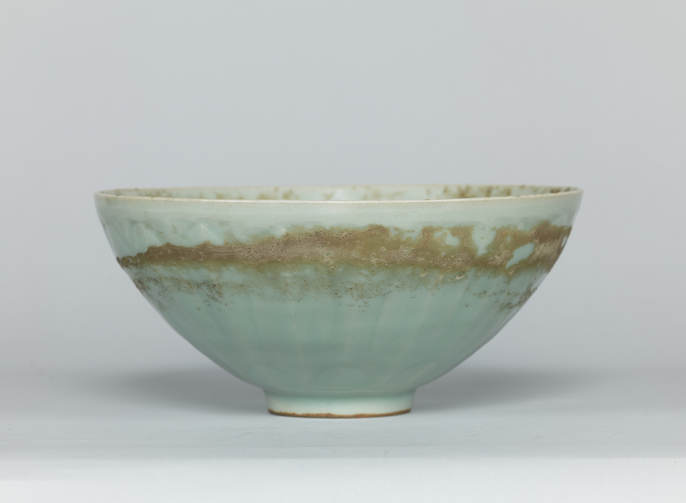
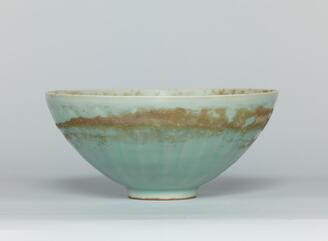
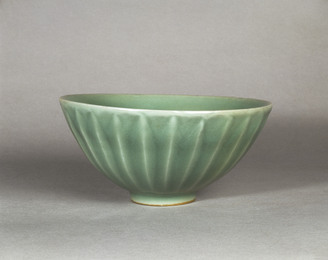
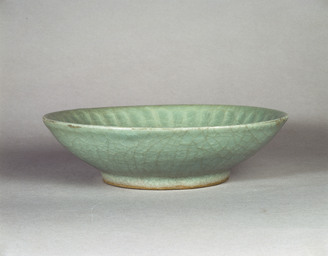
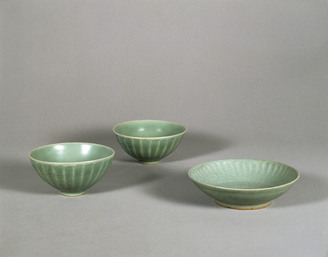
This large dark-green bowl and the two comparatively smaller bluish-green bowls were all found in the same location. The large bowl features a swirl-like pattern around the inner, green brim. A glimpse inside it reveals flowers like peonies and lotuses, while a chrysanthemum is depicted in relief at the bottom. The outer surface features a wave-like pattern close to the brim, with an arabesque design further down, and lotus petals around the base. The thick build and large patterns lend the bowl an expansive, generous air. It is believed to be an example of Tenryuji celadon from 14th century China, during the Yuan period. The surfaces of the smaller bowls are covered by a lotus-petal pattern. The bowls have a clear bluish-green hue. The prolonged period spent underground has faded the color in some parts, though the bowls still exude a gentle sheen.
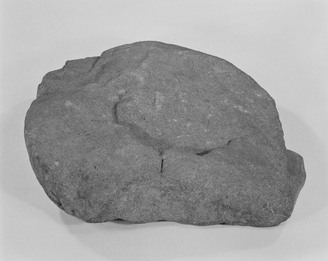
This bluish-green tone is not due to the clay ground but rather to the celadon glaze applied on top. The thick application of celadon glaze over white clay ground has imbued the bowls with a gentle feel. These bowls are thought to date back to 13th century China, during the Southern Song dynasty. The three bowls were found by accident in the garden of a private house in Kamakura in 1953. The bowls were stacked in the ground upside down, with a stone slab placed on top like a lid. This was an unprecedented find, with not much known about the background of the bowls. Kamakura was the seat of the shogunate at that time, so the bowls may have been owned by a powerful warrior or an influential temple. The enjoyment of the bowls is enhanced by trying to imagine who they belonged to and why they were buried.
— Museum description: Tokyo National Museum (CC BY 4.0), via ColBase / Japan Search.