National Treasure

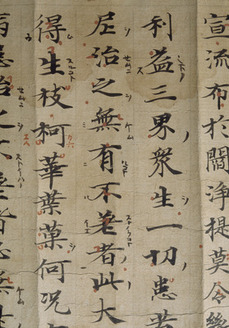
Konkōmyōsaishōō-kyō (Suvarṇaprabhāsottama-rāja-sūtra), Vol.1-10 (Kokubunji-kyō)
金光明最勝王経 巻第一~十(国分寺経)
Calligraphy & Books · Nara, 8th centuryNara NM
Home › Browse › Calligraphy & Books › Nara period › Fragment of Household Registers of Teiri Village of Nakatsu District in Buzen Province in Taihō 2
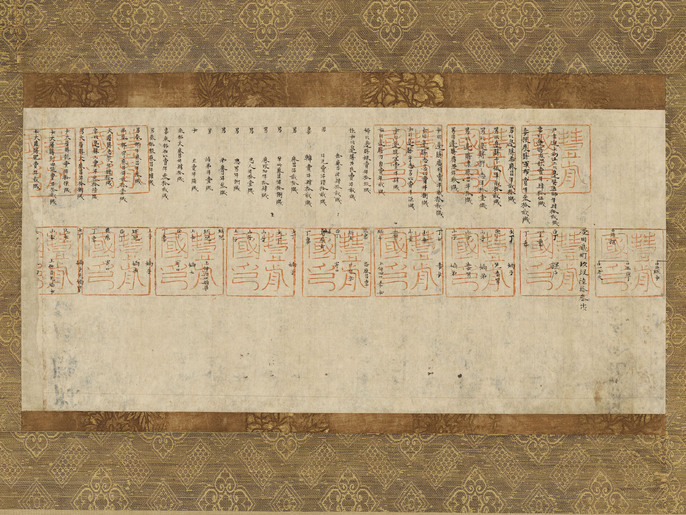
Household registers were created within the Ritsuryō legal system so the government could keep track of the population. New registers were made every six years towards such purposes as administering the collection of land taxes. This is the oldest extant example of such a household register. It has the names of each member of the household, recording such information as their age. The seal of Buzen Province is stamped across the surface of the register. {i=>[ritsuryō], content=>[Household registers were updated every six years for purposes like state-administered land allotment and similar policies that were implemented on a household basis under the , system of governance, which was founded on legal codes modeled on Chinese precedents. Dated Taihō 2 (702), this household register is for Tei Village in Nakatsu District in Buzen Province (near present-day Miyako Town, Yukuhashi City, Fukuoka Prefecture). The householder is listed first, followed by other household members in order of closest blood relationship.
One name is written per line. Each member’s relationship with the householder, their name, age, age bracket, and similar details are listed as well. The paper is stamped in red with the official seal of Buzen Province. This household register has 44 lines of text. The seven lines on the far right mark the end of that family’s data and include statistics related to the household members as well as the total allotment of land for cultivation. This is followed by another register for the householder Kawabe Shō (b. 661), w ho was a Buddhist priest. The latter part of this household register has been lost, but 37 members are listed in the remaining part. There is writing on the back as well, but it has nothing to do with household registers. Household registers were retained for 30 years, but were then recycled at scriptoriums as office ledgers to keep track of administrative matters. ]}
— Museum description: Nara National Museum (CC BY 4.0), via ColBase / Japan Search.