National Treasure

Gigaku Mask: Baramon
伎楽面 波羅門
Art Objects · Asuka, 7th centuryTNM
Home › Browse › Art Objects › Asuka period › Incense Burner with Magpie's Tail-shaped Handle

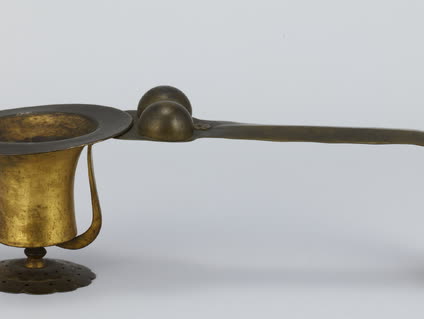
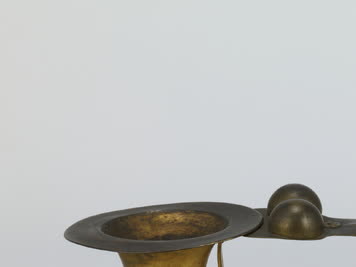
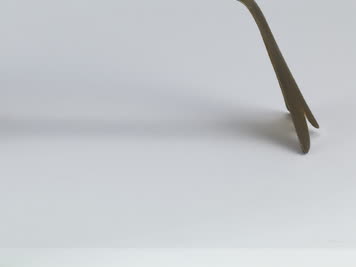
This is a hand-held tool that was used to burn offerings of incense wood for Buddhist deities. It is thought to have been used by a priest named Hyeja, who instructed Prince Shōtoku in Buddhist philosophy. Hyeja was from the prosperous Goguryeo Kingdom on the northern Korean Peninsula, and after travelling to Japan, he played a central role in Buddhist culture in the early Asuka period. This item is made from brass that was hammered into shape and gilded. At the time in East Asia, brass was considered a specialty of Persia, and writings about it begin to appear in China in the fourth century. A number of handled incense burners like this one are known to have been used in Japan, including examples in the Shōsō-inImperial Repository. The brass used to make them was of great value at the time. The end of the handle is split into three prongs that resembles the shape of the tail feathers of a magpie, which is where the item gets its name. The deep vessel where the incense would have been burned is known in Japanese as karo, and it is surrounded by a rim that protrudes outwards like the handguard on a Japanese sword.
The part of the handle attached to the karo is decorated with two large domes of metal. The design is different from incense burners used from the Nara period in the 8th century, and is thought to be the oldest extant example in Japan. Take a closer look at the unique floral shape of the plate that the karo is attached to. There are round holes in the plate between each petal, a characteristic of decorative metal fittings often seen in items made in the Korean kingdom of Baekje during the sixth and seventh centuries. This feature suggests that the incense burner may have been created in Korea. It was brought to Japan and may have been used by Prince Shōtoku and those around him. This incense burner has a handle whose end is shaped like a magpie's tail. The back of its flower-shaped base bears an inscription Daifang, the name of a Chinese commandery that existed on the Korean Peninsula, which suggest that this work may have been created in the commandery.
— Museum description: Tokyo National Museum (CC BY 4.0), via ColBase / Japan Search.


