National Treasure

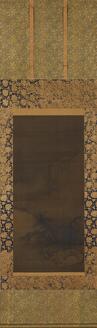
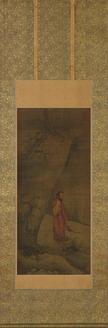
The Eccentrics Hanshan and Shide (From a Scroll of Zen Paintings)
寒山拾得図(禅機図断簡)
Paintings · Nanbokuchō, 14th centuryTNM
Home › Browse › Paintings › Nanbokuchō period › Insects and Flowers

(Right) An extant example of the early Yuan dynasty (1271–1368) flower-and-insect genre, this work captures nature's vitality. By surrounding blossoms with various insects, the artist highlights the delicate beauty and intricate life of the natural world. (Left) Flowers center this scene, framed by grapes above and eggplants below. As insects flutter about, a mantis emerges from the foliage. These fruiting vines represent auspicious wishes for longevity and a flourishing lineage of many offspring. This painting of insects and flowers comprises two scrolls. First, look at the scroll to your right. Its center is occupied by large sunset hibiscus, silver cock’s comb, and garden balsam. Bamboo extends above them, and soybean vines twine around it. A melon plant is growing on the ground to your left and dayflowers to your right. Pairs of butterflies, bees, and dragonflies fly around the plants, and katydids, grasshoppers, and snails crawl on the ground. Next, look at the scroll to your right. Hollyhock, chrysanthemum, and daylily occupy its center, and grapevines hang down above them. Plantains are growing to your left and eggplant to your right. In addition to butterflies, bees, and dragonflies, you can see lizards and praying mantises. Each of these insects and flowers had an auspicious meaning. Hibiscus and hollyhock, for example, were considered to be special plants that symbolize the sun because they bloom facing it.
Silver cock’s comb, which resembles a rooster’s crest, also has solar connections and signified success in life in China. Bamboo symbolizes abundant vitality, while plants that grow long, like melon, soybean, and grape vines, represent wishes for a prosperous and uninterrupted line of descendants. Daylily was used to celebrate boys’ birthdays, and chrysanthemums were known as symbols of long life. Butterflies, bees, and mantises were associated with long life and success due to their Chinese pronunciations. Lizards were called “stone dragons” and favored as decorative designs. Paintings of diverse groups of plants and insects are known as “insect and flower paintings.” It was recognized as a distinct painting genre in China at the beginning of the 12th century. At that time, The Piling area in what is now Jiangsu Province was famous for the large number of insect and flower paintings produced there. The Piling tradition of brilliant insect and flower paintings, characterized by rich color and compositions concerned with bilateral symmetry, continued into the 17th century. These scrolls are also Piling insect and flower paintings. Based on their dynamic composition, which had not yet been standardized, and comparatively subtle coloring, which also makes use of ink painting, they are considered to be among the earliest surviving Piling insect and flower paintings.
— Museum description: Tokyo National Museum (CC BY 4.0), via ColBase / Japan Search.