National Treasure
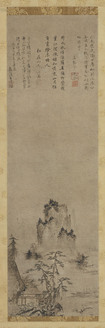
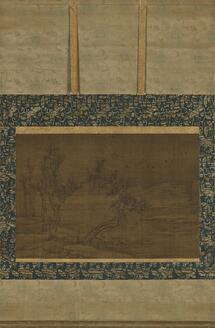
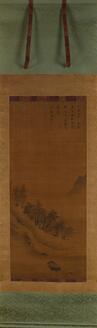
Hue of the Water, Light on the Peaks
山水図(水色巒光図)
Paintings · Muromachi, 15th centuryNara NM
Home › Browse › Paintings › Nanbokuchō period › Jizō (Kṣitigarbha)

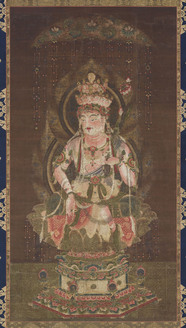
Jizō (Skt. Kṣitigarbha) is widely known as a deity who comes to this world in order to rescue sentient beings, but here he is shown at a remove, seated in the mountains. This is thought to be Mount Kyarada (Skt. Kharādiya), the paradise that the scriptures identify as Jizō’s abode. The painting evokes the style of ink monochrome landscapes, contributing to the equanimity of the atmosphere where Jizō resides. Jizō-bosatsu (Kṣitigarbha) was considered to be engaged in the salvation of people during the period between Shaka's (Śākyamuni or Buddha's) withdrawal and the emergence of Miroku (Maitreya). Jizō was often described as a standing figure on a flying cloud and was thought to appear at any place in all the Six Realms. But there are also paintings of Jizō depicted in a static posture; one of these is introduced in this article. In this picture, the seated figure of Jizō is depicted in a landscape. The composition of this picture reminds us of the Kannon (Avalokiteśvara) paintings on Mt.
Fudaraku (Potalaka), and it is conceivable that the painted landscape in this picture is that of Mt. Karada where Buddha entrusted Jizō with the salvation of people. Jizō's appearance in this painting is just like any other ordinary image of Jizō; It is holding a hōju (magic jewel) in his left hand and a shakujō-stick in his right hand, and is wearing the attire of a monk. The coloring of the costume is mostly in blue and green tones, the decorations with cut-gold foil are fine but rather too extensive and a method of simple ink painting is adopted for describing the landscape. These aspects show the influence of Chinese paintings of the Song and the Yuan dynasties. This painting displays the characteristics of Japanese Buddhist paintings during the late Kamakura period, when the Chinese influence was strong.
— Museum description: Nara National Museum (CC BY 4.0), via ColBase / Japan Search.