Important Cultural Property

Kimono (Kosode) with Plants, Cranes, Turtles, and Geometric Patterns
小袖 黒紅綸子地草木鶴亀幾何学形模様
Textiles · Edo, 17th centuryTNM
Home › Browse › Textiles › Edo period › Kimono (Kosode) with Noshi Strips and Wisterias

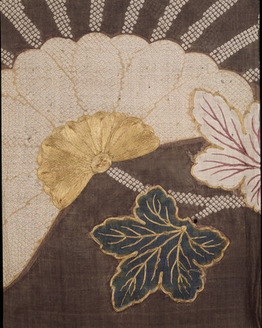
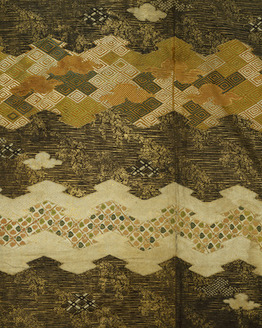
Garments called kosode are the predecessors of modern-day kimono. The name kosode refers to the small wrist openings of these garments. The ground of this particular kosode may look brown, but it is actually a reddish-black color rendered by dyeing the fabric red and then black. Gentle, curved shape was created by dying the ground reddish-black and white. The reddish parts have small flowers in embroidery, with chrysanthemum arabesques, hemp leaves, and haze patterns in gold foil rendered in between . Though since faded, the blackish section was once covered in a gold-leafed haze pattern.
This kind of design, in which patterns cover the entire surface of the fabric, was very popular among women of the warrior class at the beginning of the Edo period in the 17th century. The garment is also decorated with embroidered turtles and blue circles rendered using kanoko-shibori, or “fawn-spot dyeing,” a technique whereby small clumps of cloth are tied together with thread and dyed to create small spots. These spots were arranged to form larger designs.
— Museum description: Tokyo National Museum (CC BY 4.0), via ColBase / Japan Search.