National Treasure

Long Sword (Tachi), Inscribed “Norikuni”
太刀 銘則国
Metalwork · Kamakura, 13th centuryKyoto NM
Home › Browse › Metalwork › Nanbokuchō period › Long Sword (Tachi), Signed "Unji of Bizen
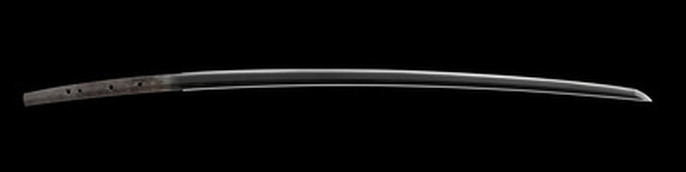
At the end of the Kamakura period (1185-1333), a swordsmith named Unshô (n.d.) rose to prominence in Unkan no Shô in Bizen Province (the center of present-day Okayama Prefecture). Differing in style from the Osafune and other schools, the new school was known as the Ukan School. Unji was the son of Unshô. A number of features of this long sword (J., tachi) blade are characteristic of the Ukan School and reflect the style of Kyoto blades. The blade itself is narrow, and the curve is approximately at the center of the blade. The straight temper line of medium width (J., chû suguha) is broken by small undulations (J., konotare) in some places.
The theory that one branch of the school made sword blades in Kyoto is based on these features. The inscriptions, on both sides of the tang, read: Bizen no Kuni ni sumitaru Unji (Unji, resident of Bizen Province) on the obverse and Kenmu kinoto i ni nen jûichigatsu (Second year of Kenmu [1335], kinoto year of the boar, eleventh month) on the reverse. Blades bearing extended inscriptions with Unji's name are extremely rare. This sword, with its Kenmu era inscription, is a precious source of information about when the Ukan School was active.
— Museum description: Kyoto National Museum (CC BY 4.0), via ColBase / Japan Search.