National Treasure

Bishamon Ten (Vaiśravaṇa), Extermination of Evil (J., Hekija-e)
辟邪絵 毘沙門天像
Paintings · Heian, 12th centuryNara NM
Home › Browse › Paintings › Heian period › Mandala of the One-Syllable Golden Wheel (Skt. Ekākṣara-uṣṇīṣacakra)
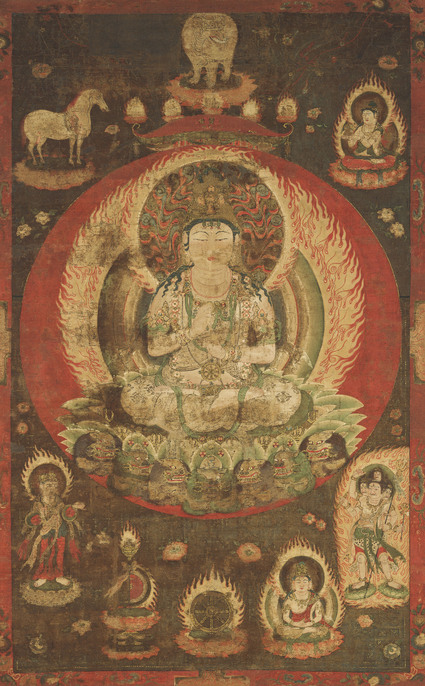
{i=>[cakravarti-rāja, uṣṇīṣa], content=>[This is an icon of the Buddha likened to the ancient Indian ideal of the wheel-turning king (Skt. , ): the One-Syllable Golden Wheel (Skt. Ekākṣara-uṣṇīṣacakra). Buddhas emanating from the Buddhist merit residing in the Buddha’s cranial mound (, ) can appear as esoteric deities in anthropomorphic forms. This is the most powerful of such deities, and it is surrounded by the Goddess of the Buddha’s Eye (Skt. Buddhalocanā) and such potent auspicious symbols as the Seven Treasures of the Cakravartin. This masterwork is significant as the oldest extant painting of a One-Syllable Golden Wheel mandala.]} This mandala has been used as a principal object of the Ichiji-kinrin (Ekākṣara-uṣṇiṣacakra) ritual to pray for good health, divine favor, love and respect. The composition of this mandala is based on the text of the Kongōchō-kyō Ichijichōrinnō Yuga-issaijishō Nenjujōbutsugiki sutra with annotations by Priest Fukū. The central image of the mandala is Dainichi-kinrin, who is making a finger sign of the Chiken-in type, and is sitting on a lotus seat on lions.
He is bearing a flaming halo within a large disk of the moon. A rimpō wheel is placed at the bottom of the painting. A magic jewel, a sacred female figure, a holy horse, a holy elephant, Shuzōhō, Shuheihō, and Butsugen-butsumo (Buddha-locana) are surrounding the central image of Dainichi Kinrin. Dainichi Kinrin has a white body with bright red lining and red shading which give it an energetic appearance. The figure is wearing decorative ornaments rendered with gold foil. Rich coloring with mainly warm colors makes the painting elegant and reflects the characteristics of Buddhist paintings during the reign of the Fujiwara family. The upper half of the background is painted in indigo representing the sky, and the lower part of the ground is decorated with a stone pavement pattern in cut-gold foil on indigo background.
— Museum description: Nara National Museum (CC BY 4.0), via ColBase / Japan Search.


