National Treasure
Sword with an Inscription and a Ring Pommel
金象嵌銘環頭大刀
Archaeological Objects · Kofun, 301–400TNM
Home › Browse › Archaeological Objects › Kofun period › Mirror with Deities, Mythical Beasts, and a Chariot
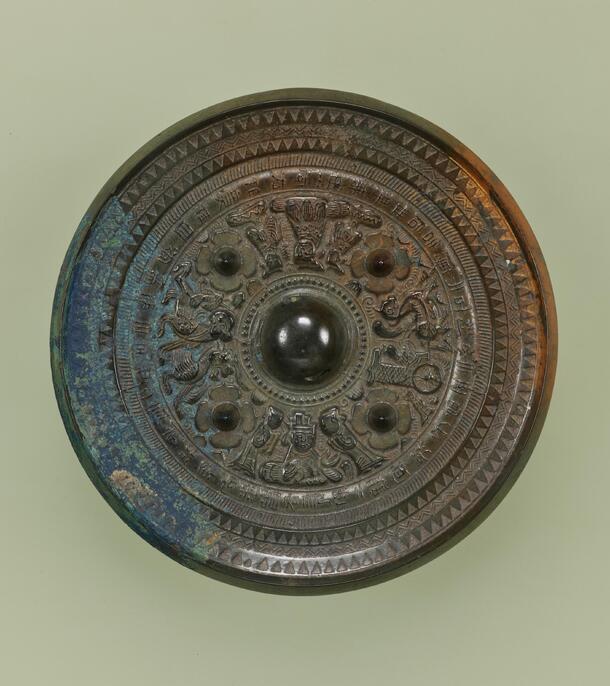
Designs of divinities, dragons, tigers, chariots, and horses come from Chinese beliefs regarding Taoist immortals. Decorative mirrors like this were produced in China from the Eastern Han Dynasty, which began in the year 25, to the following Three Kingdoms Period, which lasted until the year 280. They feature pictorial iconography depicted in relief on the back. Iconography on these mirrors shares many similarities with images carved on stones that once adorned tomb walls in China. It is based on the heavenly deities and immortals found in Chinese folk belief. At the center of this mirror is a nub where a string was attached. This is circled by a dragon, a tiger and a carriage pulled by divine beasts. These are joined by two divinities that are facing each other: Dongwangfu, or King Father of the East, and Xiwangmu, or Queen Mother of the West.
This iconography reflects the world view of ancient China. The figures are surrounded by an auspicious inscription which roughly translated as follows. ‘This mirror is a beautiful, rare work. The possessor will have long-living parents, successful descendants and unending prosperity.’ The mirror was excavated from the 111.5-meter-long Samita Takarazuka tumulus in 1881. At that time, over 31 bronze mirrors were excavated from the central clay chamber together with gems and stone objects. This collection included mirrors with designs unique to the Japanese archipelago as well as several mirrors imported from China, like this example. It speaks volumes about the rich, international culture that prevailed at the time.
— Museum description: Tokyo National Museum (CC BY 4.0), via ColBase / Japan Search.