National Treasure

Arrowhead-shaped Stones
鏃形石製品
Archaeological Objects · Kofun, 4th centuryTNM
Home › Browse › Archaeological Objects › Kofun period › Mirror with Hunting Scenes
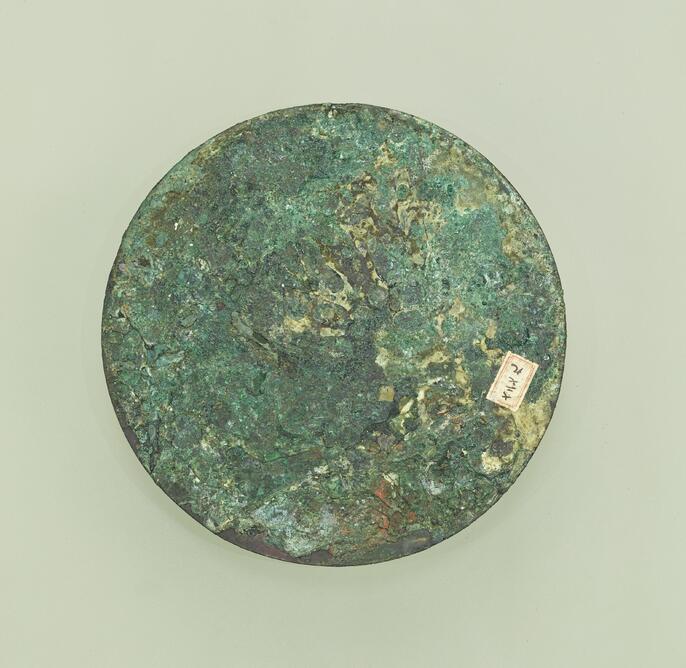
In ancient times, bronze mirrors were venerated for their ability to reflect figures and light. They were also treasured as symbols of good luck and authority. It is not known for certain where this mirror was excavated, but mirrors like this were often interred in tombs and placed on or against the body of the tomb's occupant. It is thought they were used to protect or appease the soul of the departed. In the fourth century, mirrors began to be produced in Japan. Some were modelled on Chinese mirrors, while others featured uniquely Japanese motifs. This is an example of the latter. The inner and outer sections are divided by two concentric circles. Four people and four animals resembling horned deer line up alternately within the inner area. They are surrounded by ten people in the outer area. Most of these hold shields in one arm and a sword-like object in the other.
This was thought to depict a hunting scene, as in the title of this object. People hunted with bows and arrows at that time, though, so shields and swords were unnecessary. Also, one figure in the inner section is holding a jar rather than a weapon. Jars represented prayers for bounteous harvests, while deer symbolized regeneration because they could grow new horns. As such, some believe this mirror depicts a ceremonial dancing scene. Many Japanese-style mirrors feature patterns composed of several stylized motifs, but this extremely valuable work is quite unusual in the way it portrays movement amid one overarching pictorial scene. The back side of this mirror features deer and figures with shields and swords. These motifs are thought to symbolize a hunting scene, but some scholars argue that they depict a dancing scene.
— Museum description: Tokyo National Museum (CC BY 4.0), via ColBase / Japan Search.


