National Treasure

Bamboo Cabinet
竹厨子
Art Objects · Nara, 8th centuryTNM
Home › Browse › Art Objects › Nara period › Record of the Imperial Bequest to Hōryūji Temple
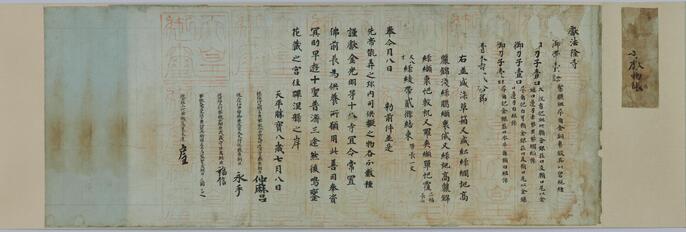
Emperor Shōmu, who created the Great Buddha at Tōdaiji temple in Nara, passed away on the second day of the fifth month in 756. That same year, on the eighth day of the seventh month, his daughter, Empress Kōken, presented Shōmu’s possessions to 18 different temples in the Nara area, including Tōdaiji, as offerings for the repose of his soul. The Record of the Imperial Bequest to Hōryūji contains a list of the items dedicated to Hōryūji at that time. Ruled lines were drawn in pale ink on paper dyed a light blue. The 22 columns are filled with a bold, formal script that was fashionable in Tang China. The end of the document has the signatures of five powerful courtiers, including Fujiwara no Nakamaro, with each signature showing a distinctive, individual style. In order to ensure the document could not be altered by later generations, it was stamped with a seal reading “The Seal of the Emperor” in no less than 18 places.
— Museum description: Tokyo National Museum (CC BY 4.0), via ColBase / Japan Search.


