Important Cultural Property
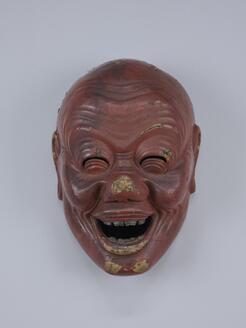
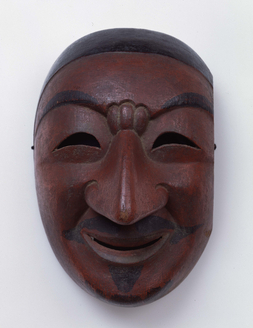
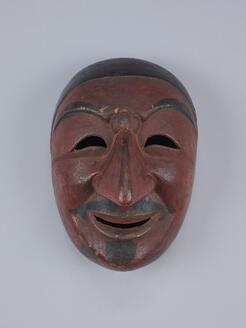
Bugaku Mask, Emimen type for Ninomai dance
舞楽面 二ノ舞(咲面)
Sculpture · Kamakura, 1201–1400TNM
Home › Browse › Sculpture › Kamakura period › Sculpture Traditionally Identified as Minamoto no Yoritomo
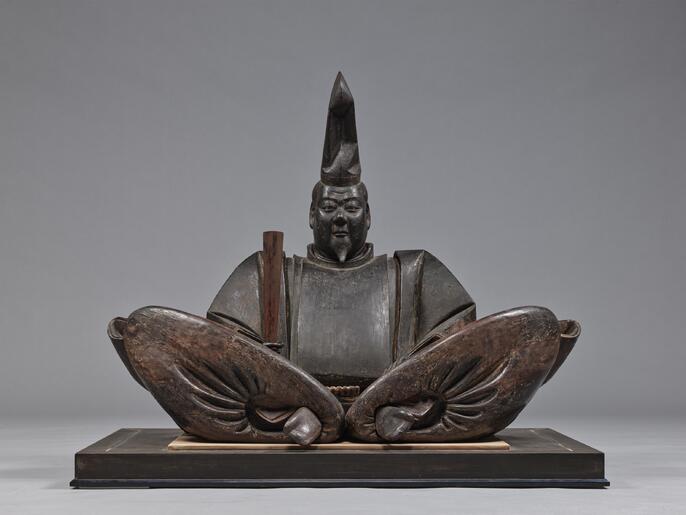
This wooden statue portrays a male warrior. He sports a tall eboshi, a type of headgear worn by court nobles. He also wears a kariginu, an outer garment not sewn together at the sides, and a sashinuki, or loose trousers that tighten around the ankles. This type of costume was designed for ease of use and it was originally used for hunting. It was first worn by the nobility, but it was later adopted by members of the warrior class too. It became a type of formal dress for warriors from the late 12th century onwards, after a military government seized power in Japan. At the time, starched, stiff garments with linear finishings were popular among the nobility. This preference is also apparent in the depiction of this statue‘s clothing. The characteristic cross-legged sitting posture can also be seen in contemporary portraits of court nobles. Though the military class held the reins of power, it seems they still copied the fashions and customs of the nobility to a large extent. This is said to be a portrait of Minamoto no Yoritomo, the general who founded the Kamakura shogunate, Japans first military government, at the end of the 12th century. From the sculptural style, it appears to have been made 100 years after the death of Yoritomo. Several other paintings and sculptures are said to portray Minamoto no Yoritomo, but each has different facial features and expressions, so we still don‘t know which presents a true likeness.
However, with its formal garb, straight back, and forward-facing gaze, this statue exudes an air of dignity suitable for a military leader. The plump cheeks, stiffly-pursed lips and other realistic facial features are characteristic of sculptural portraits from that time. The image was once housed in Tsurugaoka Hachimangu Shrine in Kamakura, Kanagawa Prefecture. This shrine has a deep connection with Minamoto no Yoritomo and it was long a focus of worship for the warrior class during the period of military rule that lasted until the end of the 19th century. From this superbly-crafted statue, we can gain a sense of why Minamoto no Yoritomo was so deeply venerated as an exemplary member of the warrior class. This stately figure is traditionally identified as Minamoto no Yoritomo, the first shogun of the Kamakura period (1192–1333). He wears a heavily starched [kariginu] (hunting robe), the semi-formal uniform of the samurai. His distinctive way of sitting, with the soles of the feet facing up, was how the noblemen of the imperial court posed for their portraits.
— Museum description: Tokyo National Museum (CC BY 4.0), via ColBase / Japan Search.