National Treasure

Seated Yakushi Nyorai (Sk. Bhaiṣajyaguru)
薬師如来坐像
Sculpture · Heian, 9th centuryNara NM
Home › Browse › Sculpture › Nara period › Seated Yakushi Nyorai (Sk. Bhaiṣajyaguru)
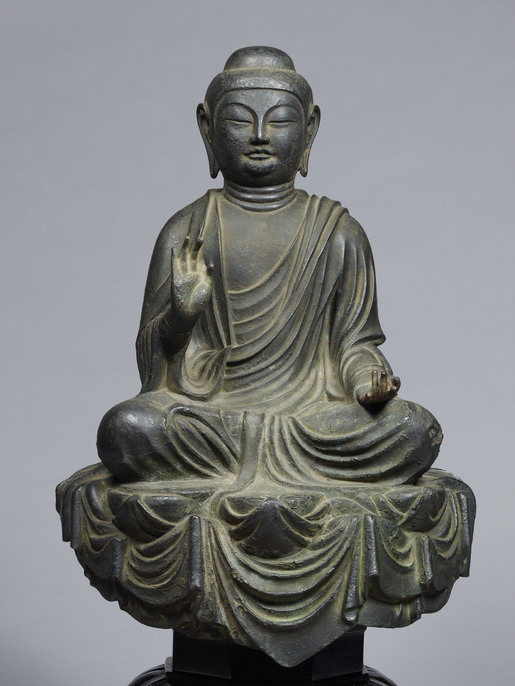
It is rare to see the lotus-shape of a pedestal completely draped in the robes of an image to form fabric-wrapped lotus petals in Japanese Buddhist statues. In this element, in addition to the lovely and plump features and the elegance of the broad-chested form, one sees the influence of Buddhist images from China produced during the Tang dynasty (618–907). This Yakushi nyorai (Skt. Bhaiṣajyaguru) has a round face with a gentle smile and plump body. The depiction of the lotus pedestal below the hem of the robe is a style frequently seen in examples from the High Tang. The influence of the Chinese type is evident here. The expression of the clinging robe, which calls to mind that of dry lacquer statues, is another special characteristic of this work. The whole body was cast by a single mold. The gilded surface of the statue is no longer extant because of the damage by fire in the past, and the right hand was repaired with wood. The contour line of the plump face, three deep lines across the neck, and the sturdy build of the body reflect the characteristics of the statues made during the mid-Tempyō era. The realistic description of the drapes hanging over the lotus seat indicates the influence of Chinese sculptures of the Tang dynasty.
{br=>[[]], content=>[The curled fingers on the statue’s left hand indicate that it originally depicted the buddha Yakushi (Skt. Bhaiṣajyaguru) holding a medicine pot. The sculpture shares many similarities with wood-core dry lacquer statues from the late Nara period (710–794), including the stout, short body wrapped in robes with a sense of viscosity, full cheeks, and curves around the slightly up-angled eyes, suggesting the statue dates to around the same period. The skirt wrapped around the statue’s lower body flows over the lotus pedestal, hanging down as it catches on the tips of the lotus petals. This style is often seen in statues made during the Tang dynasty (618–907) in China but very few extant examples exist in Japan. It seems to have been produced with a keen awareness of sculptures from the Asian continent. , The entire figure, including the skirt hanging over the lotus pedestal, was made with relatively thick walls in a single casting. The inside is hollow. Some aspects suggest the statue was exposed to fire at some point in its history, such as the current lack of gilding and the rough surface texture. The fingers on the right hand are made of wood that was added later.]}
— Museum description: Nara National Museum (CC BY 4.0), via ColBase / Japan Search.