National Treasure

Cinerary Urn
瑠璃骨壺
Archaeological Objects · Asuka, 707TNM
Home › Browse › Archaeological Objects › Heian period › Spouted Vessel with Human Figure Ornaments

Vessels with spouts were used during the Jomon period to pour liquid during rituals and other occasions. This example has a particularly unique form. The neck area is divided into two sections and it is attached to the doughnut-shaped body. The section around the hole on the body once had a spout for pouring. Even more unusual are the four faces located on all four sides. The faces on the left and right are also furnished with bodies. Though the four faces have similar expressions, decorations with pairs of faces and human figures often portray males and females. They were probably imbued with prayers for fecundity, prosperous descendants, and the bounties of nature. The strong beliefs of the Jomon folk are in full display in this vessel’s unique form and the human figure ornamentation.
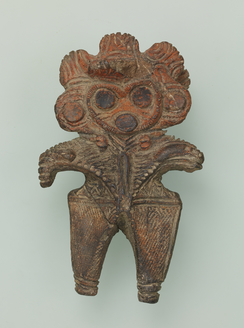
Jomon earthenware usually features abstract designs. Earthenware with human figure ornamentation appeared in central Japan, such as the Kanto and Chubu regions, during the mid-Jomon period, and in the northeastern area stretching from Hokkaido to the Kanto region during the very last phase of the Jomon period. These periods also saw the production of many diverse human-shaped dogu clay figurines. The existence of these figurines probably contributed substantially to the emergence of this type of earthenware. This vessel was probably used in burial rituals. The patterns were created by pressing rope into the surface and by attaching pieces of clay. Faces are attached to the front and back of the spout, while human figures are found on the sides.
— Museum description: Tokyo National Museum (CC BY 4.0), via ColBase / Japan Search.