National Treasure

Bamboo Cabinet
竹厨子
Art Objects · Nara, 8th centuryTNM
Home › Browse › Art Objects › Nara period › Sutra Box with Wooden Inlay
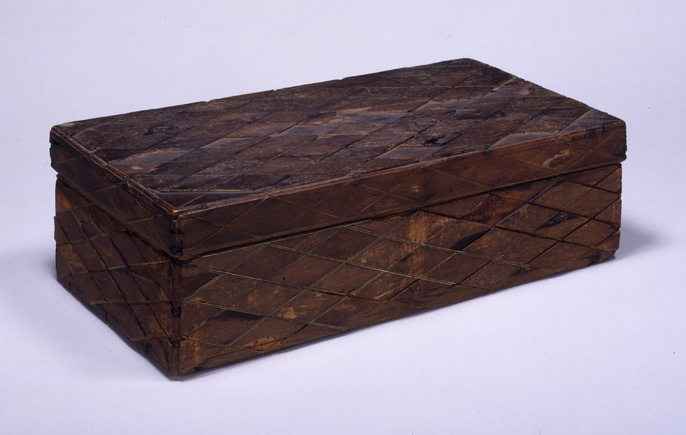
Mokuga, or marquetry, is a decorative technique in which pieces of rosewood, ebony, agarwood, ivory and other materials are combined together into patterns. It originated in the mosaic techniques of ancient Egypt and Persia, then was brought to East Asia and further developed in China between the Sui and Tang dynasties. This mokuga sutra box has been decorated with thin pieces of agarwood shaped into lozenges and triangles, affixed to all sides. The joints appear in a lattice pattern made of ebony placed between pieces of ivory. Agarwood is an aromatic tree that grows in southern China and regions further south while ivory and ebony also had to be imported into Japan.
These materials are still considered valuable today, but in eighth-century Japan, they would have been considered even more precious. The simple pattern makes the colors and beautiful textures of such materials stand out all the more. This box was used to store a transcription of the Lotus Sutra in eight scrolls. This lidded box is decorated inside and out in wooden inlay made from aromatic wood that was traditionally used for incense. Allegedly, the box once contained the eight scrolls that comprise the Lotus Sutra (N-12) in the Collection of Hōryūji Treasures.
— Museum description: Tokyo National Museum (CC BY 4.0), via ColBase / Japan Search.