National Treasure
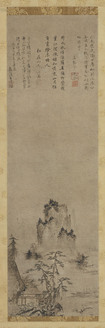
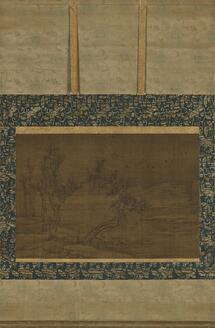
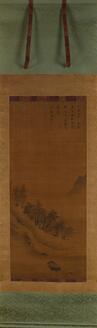
Hue of the Water, Light on the Peaks
山水図(水色巒光図)
Paintings · Muromachi, 15th centuryNara NM
Home › Browse › Paintings › Nanbokuchō period › Ten Kings of Hell

When a person dies, they encounter the Ten Kings of Hell, visiting with each of these underworld bureaucrats sequentially. The kings judge the deeds of the deceased and determine the realm where they will be reborn. The two hanging scrolls seen here are by Lu Zhongyuan (J. Riku Chūen), a Buddhist painter active in the port city of Ningbo (Zhejiang Province). The two scrolls bear signatures which read Lu Zongyuan. This artist has not been identified, but he may be a member of Lu Xinzhong's family. The compositions of King Enra (Yama-rāja)'s painting and King Godō Tenrin's painting are similar to the compositions of Lu Xinzhong's works kept in Hōnen-ji and other temples. The composition of the painting of King Godō Tenrin by Lu Zongyuan introduced in this article and the composition of the painting with the same motif by Lu Xinzhong in the Nara National Museum have some aspects in common.
This fact indicates that the compositions of paintings were succeeded from one artist to another within the studio. Lu Zongyuan left more space in his paintings than Lu Xinzhong did, and Lu Zongyuan's description of hell, at the bottom of the paintings is more substantial than the description by Lu Xinzhong. The scenes of hell by Lu Zongyuan are not mere appendixes to the major motif of the painting but they have their own significance. Lu Zongyuan's depiction of divine figures and other objects are less precise than Lu Xinzhong's works. This indicates that Lu Zongyuan's paintings were made later than Lu Xinzhong's. These are important paintings which show Lu's studio's tradition of Buddhist painting in a provincial area of China.
— Museum description: Nara National Museum (CC BY 4.0), via ColBase / Japan Search.