National Treasure

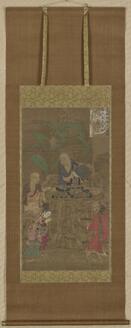
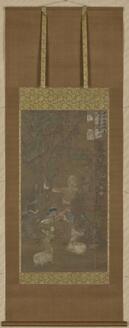
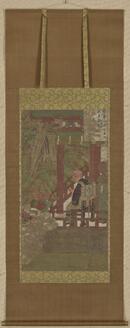
Bishamon Ten (Vaiśravaṇa), Extermination of Evil (J., Hekija-e)
辟邪絵 毘沙門天像
Paintings · Heian, 12th centuryNara NM
Home › Browse › Paintings › Nara period › The Illustrated Sutra of Cause and Effect
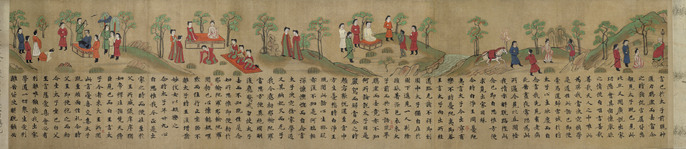
{i=>[Sutra of Cause and Effect, Guoqu xianzai yinguo jing, Kako genzai inga kyō], content=>[This presents in visual form the , (Ch. , ; J. , ), which expounds the Buddha’s biography. The text of the sutra appears in the lower section and corresponding illustrations run across the top. This is thought to be a copy of a version that was brought to Japan in the Nara period (710–794) from China during the Tang dynasty (618–907). This is part of one scroll from what was once an eight-scroll set.]} The text of this E-inga-kyō is the Buddhist scripture Kako Genzai Inga-kyō, which covers the biography of Shaka (Śākyamuni) including his previous life before birth, his birth, his Buddhistic training, and his attainment of the state of Buddha. The Chinese version of this scripture, translated by Priest Gunabatsudara (Quinuobatuoluo) is well known. Originally it consisted of four volumes, but when illustrations are included it consists of eight volumes. Text was written in the lower half of the handscroll, and illustrations corresponding the text passages were painted in the upper half of the scroll.
According to an old document in the Shōsō-in treasure house, some sets of this sutra scrolls were made during the Nara period, but not a single complete set of scrolls is extant. Only some segments of the scrolls made during the Nara and early Heian periods are still kept in Jōbon Rendai-ji temple, Daigo-ji temple, Tokyo University of Fine Arts, Idemitsu Art Museum, and by some private collectors. The scroll introduced in this article is a segment from the last part of the Jōbon Rendai-ji version, which is the first half of the second volume of the sutra. In the described scenes the Prince has decided to enter priesthood, and his wife and men are trying to stop him by suggesting pleasant things. The paintings in vivid colors show characteristics of the painting style during the period of the Six Dynasties in China.
— Museum description: Nara National Museum (CC BY 4.0), via ColBase / Japan Search.