National Treasure

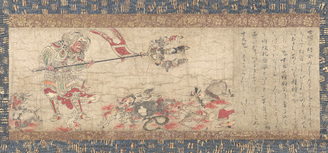
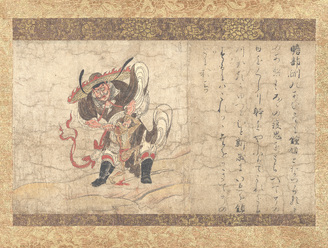
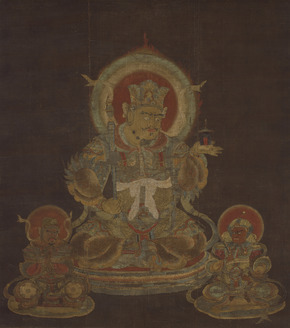
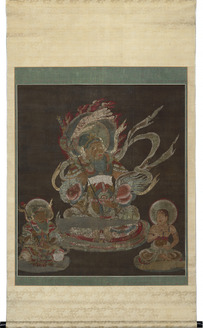
Bishamon Ten (Vaiśravaṇa), Extermination of Evil (J., Hekija-e)
辟邪絵 毘沙門天像
Paintings · Heian, 12th centuryNara NM
Home › Browse › Paintings › Heian period › The Pure Land of Amida (Skt. Amitābha)

The Pure Land where Amida (Skt. Amitābha) Buddha resides—the Land of Heavenly Bliss (Gokuraku Jōdo)—is a paradise free from any suffering, and here we see a vision of this realm expressed in vivid colors. The painting is significant as a very early reflection in Japanese painting of Pure Land iconography developed in China during the Tang dynasty (618–907). It comes from Gokurakuji Temple in Nara City. There are three types of Amida's Pure Land paintings in Japan: Taima Mandara, Seikai Mandara, and Chikō Mandara. The Taima Mandara is based on the description of the Kanmuryōju-kyō (Amitāyur-buddha-dhyāna sūtra) and illustrates the story of Ajase the saint, thirteen virtues, and nine styles of going to the Pure Land. In the Seikai Mandara, the painting is surrounded by sixteen verses. The Amida's (Amitābha's) Pure Land introduced in this article belongs to neither the Taima nor Seikai types of mandaras.
The concept in this picture is similar to that of the Chikō Mandara, which is based on the description in the Muryōju-kyō (Sukhāvatī-vyuha sūtra). Priest Chikō in Gangō-ji temple established the Chikō mandara style during the late Nara period. Not only the concept but also the composition of this picture is similar to that of the Chikō Mandara; the scene is divided horizontally into three or four layers. Beginning with the top layer, sky, palaces, Buddhist deities, sacred trees, the sacred pond, and a dance performance were painted. Bright red and whitish-green are the major colors in the painting, and shu-vermilion and tan-red are used for the gradation in the shading of the costume. This picture is notable for its Japanese style.
— Museum description: Nara National Museum (CC BY 4.0), via ColBase / Japan Search.