National Treasure
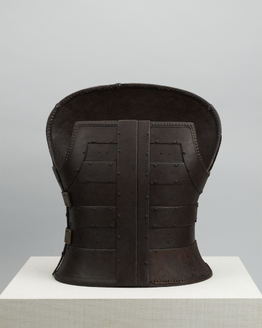
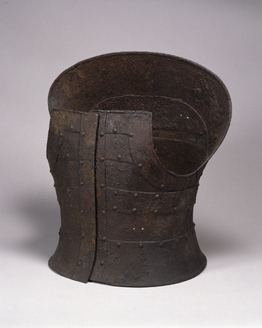
Armor ("Tankō") with Horizontal Plates Joined with Leather
横矧板革綴短甲
Archaeological Objects · Kofun, 401–600TNM
Home › Browse › Archaeological Objects › Kofun period › Tomb Sculpture ("Haniwa"): House
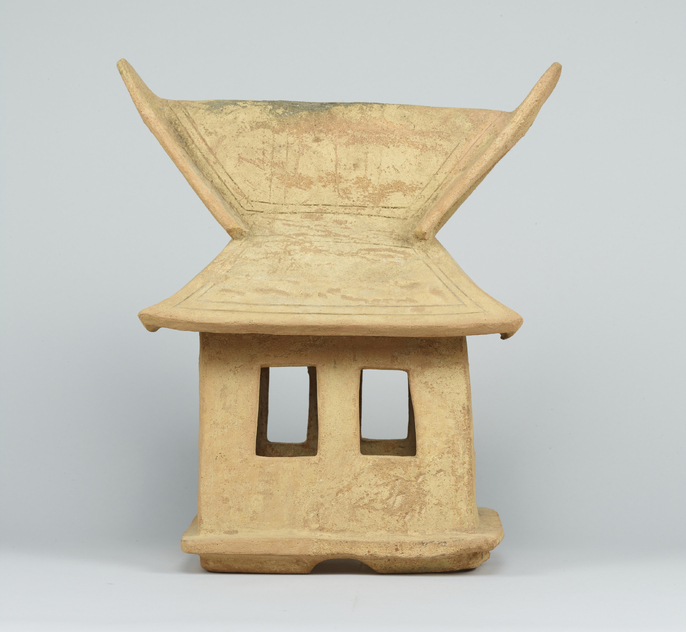
Haniwa are unglazed terracotta clay ornaments that were placed on or around the burial mounds of kings and other powerful figures from the 3rd to the 7th century. This haniwa is shaped like a house, though the roof would look conspicuously large on a real house. This distinctive roof has a hip-and-gable structure, whereby the upper part is in gable form and the lower part is in hip form. This type of roof can still be seen today on temples and castles. The curved sections of the upper roof are fitted with bargeboards to block out the wind and rain, with the bargeboards supported by horizontal beams. The entire roof is also scored with lines. The roof is probably thatched with straw, for instance, and these incised lines probably represent the batten or other aspects of the building's frame. The four holes on the side walls are windows.
The front and back walls also have slightly-larger entrances shaped like square keyholes. The abundance of windows suggests this is a home rather than a storehouse. House-shaped haniwa were among the earliest examples of figurative haniwa. Perhaps they represented the homes of the people interred in the tumuli. Powerful lords would build grand houses to display their social standing. The roof of this haniwa has been enlarged to emphasize social status, while the roof edges also curve out in an exaggerated manner. However, this object also recreates the architectural structure in intricate fashion. This valuable historical artifact reveals how buildings must have looked during that time. Tomb sculptures of houses were placed atop burial mounds and must have played an important role in ancient funerary rites.
— Museum description: Tokyo National Museum (CC BY 4.0), via ColBase / Japan Search.