National Treasure
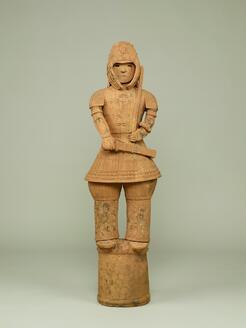
Tomb Sculpture ("Haniwa"): Warrior in "Keikō" Armor
埴輪 挂甲の武人
Archaeological Objects · Asuka, 6th centuryTNM
Home › Browse › Archaeological Objects › Asuka period › Tomb Sculpture ("Haniwa"): Warrior in "Tankō" Armor

Created in the 6th century, this human-shaped tomb sculpture represents a 5th-century warrior. This is a teracotta tomb sculpture called haniwa. Haniwa were placed on or around the tumuli of powerful figures in Japan from the 3rd to the 6th century. This bust depicts a helmeted warrior clad in body armor. The design is quite basic but it skillfully portrays the characteristics of armor and weaponry from that era. Real body armor comprised several broad iron plates, for example, with lines used here to demarcate the outline of these plates. The plates were originally threaded together using leather cords, though they were later fastened using rivets. The round nodules here depict these rivets. We can also see the straps passing over the shoulders and the raised front of the helmet.
Tokyo National Museum's collection also includes iron armor and weaponry from that era, so we can compare this to actual armor and helmets. The warrior also sports a necklace around his wide neck and a sword on his left hip. Though the arms and ears are missing, the deep-set eyes, sharp nose and chin, and slightly-open mouth exude a sense of uncomplicated vigor. The warrior's neck seems to be turned slightly to the left. Perhaps he is watching out for any unusual goings-on around him. This valuable work reveals how warriors looked during the mid-Kofun period. Incidentally, this work was chosen to be featured on a poster for the 1940 Tokyo Summer Olympic Games, which actually never took place.
— Museum description: Tokyo National Museum (CC BY 4.0), via ColBase / Japan Search.