National Treasure
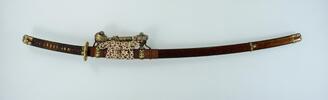
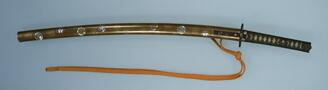
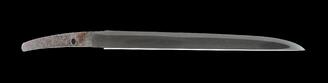
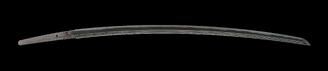
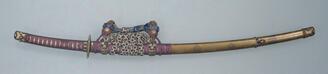
Cord-Wrapped Sword Mounting ("Itomaki no Tachi")
梨地糸巻太刀(国宝 太刀 伯耆安綱(名物 童子切安綱)の拵)
Swords & Armour · Edo, 17th centuryTNM
Home › Browse › Swords & Armour › Edo period › Armor (Gusoku) with a Two-Piece Cuirass and Black Lacing

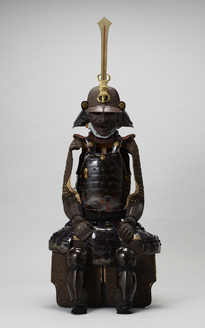
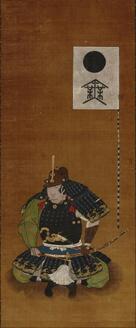
This suit of armor belonged to Sakakibara Yasumasa, one of Tokugawa Ieyasu's loyal generals. In addition to the standard cuirass and helmet, it also features parts protecting the arms, knees, and shins. These were previously unheard of, but this type of all-body protection became the norm during the Edo period. The cuirass is coated with a glossy coat of black lacquer and features a silver dragon motif. The kusazuri, or the skirt-like part protecting the thigh area, also features a wave design. These patterns were created by sprinkling fine gold powder or pasting thin sheets of silver onto the armor's surface. This armor is particularly interesting because we know exactly who used it; there is even a painting showing Sakakibara wearing it.
The painting also depicts a banner. This banner has been handed down to present day with the armor, as has an uma-jirushi, or a standard raised during the heat of battle. When viewed together, these truly give us a feel for the atmosphere of the time. This exceptional armor was likely owned by Sakakibara Yasumasa (1548–1606), one of the most renowned generals of Japan’s Warring States period. The iron breastplate is weatherproofed with black lacquer and decorated with a dragon representing power and authority. The helmet is adorned with a Buddhist sword representing the destruction of evil and ignorance.
— Museum description: Tokyo National Museum (CC BY 4.0), via ColBase / Japan Search.