Treasures of JapanA catalogue of Japan's designated cultural properties 2,690 works catalogued

Home › Browse › Swords & Armour › Edo period › "Katana" Mounting ("Uchigatana") with Wild-Ginger Crests
National Treasure

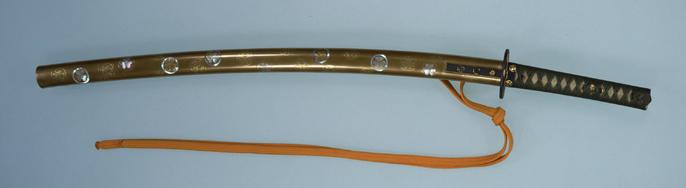
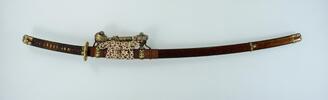
"Katana" Mounting ("Uchigatana") with Wild-Ginger Crests

沃懸地葵紋蒔絵螺鈿打刀(国宝 太刀 福岡一文字助真の拵)
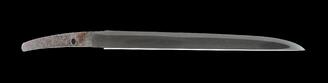
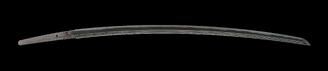
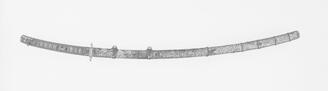
"Katana" Mounting ("Uchigatana") with Wild-Ginger Crests (沃懸地葵紋蒔絵螺鈿打刀(国宝 太刀 福岡一文字助真の拵))
PLATE IImage: Tokyo National Museum, via ColBase — CC BY 4.0
At a glance — Swords & Armour · Edo period, 19th century · held by Tokyo National Museum · designated National Treasure of Japan.

Fact Sheet

Designation
National Treasure (国宝)
Date
1801–1900
Location
Ueno, Tokyo
Catalogue ID
cobas-166381

Find more

Round symbols depicting wild-ginger leaves adorn the grip, guard, and sheath. These are the official insignia of the Kishū Tokugawa, a branch of the family that ruled Japan during the Edo period (1603–1868). The symbols on the sheath alternate between two luxury finishes: gold powder suspended in lacquer and brilliant iridescent seashell.

— Museum description: Tokyo National Museum (CC BY 4.0), via ColBase / Japan Search.
Record & Sources

Cite this page: “"Katana" Mounting ("Uchigatana") with Wild-Ginger Crests(沃懸地葵紋蒔絵螺鈿打刀(国宝 太刀 福岡一文字助真の拵)).” Treasures of Japan, catalogue no. cobas-166381. Tokyo National Museum. https://treasures.yamato-kenkou.com/treasures/katana-mounting-uchigatana-with-wild-ginger-crests/ — entry last verified 1 November 2026.
Full record data (as published in the official catalogue record)
  • Category: Applied arts:Arms and armor:Blades:Tachi
  • Cultural property designation: National Treasure
  • Genre: Arms & Armor
  • Material: Lacquered wood with [maki-e] and mother-of-pearl inlay on a ground of metal powder ([ikakeji])
  • 員数: 1口
  • 分類: 刀剣
  • 種別: 工芸:武器・武具:刀剣:太刀

Also at the Tokyo National Museum More →

National Treasure
Long Sword (Katana) (刀 金象嵌銘 城和泉守所持 正宗磨上 本阿(花押))

Long Sword (Katana)

刀 金象嵌銘 城和泉守所持 正宗磨上 本阿(花押)
Swords & Armour · Nanbokuchō, 14th centuryTNM

More swords & armour of the Edo period More →

Advertisement