National Treasure

Letter by the priest Saichō
最澄筆 尺牘(久隔帖)
Calligraphy & Books · Heian, 9th centuryNara NM
Home › Browse › Calligraphy & Books › Heian period › Commentary on Vajracchedikā-sūtra, by priest Kūkai

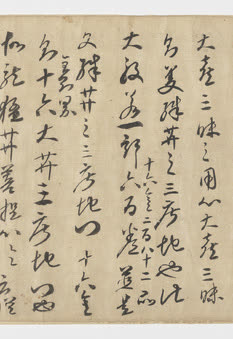
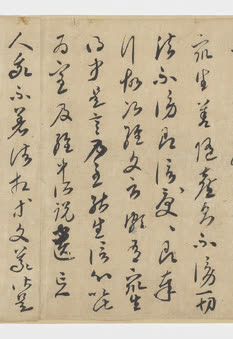
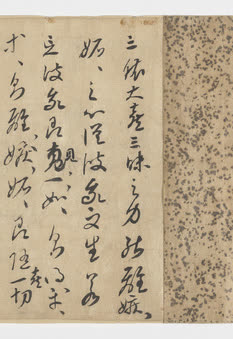
{i=>[Diamond Sutra, Vajracchedikāprajñāpāramitā-sūtra, Jingang borepoluomiduo jing, Kongō hannya kyō], content=>[This explanation of the , (Skt. , ; Ch. , ; J. , ) is written by Kūkai (774–835) himself. The traces of revisions and corrections indicate that he wrote this as a draft version of his explication. It includes sharp and ethereal writing in both cursive (grass script) and semicursive (running script) calligraphic styles. Kūkai was famous not only for founding Shingon, but also as a calligrapher; he is known as one of the “Three Brushes.” Here we have the chance to experience his exceptional skill.]} {br=>[[], []], content=>[This scroll contains the explanatory comments by Priest Kūkai (774-835) on the Nōdan Kongō Hannya-kyō (Vajracchedikā sūtra), which was translated into Chinese by Gijō.
The comments were made from the viewpoint of esoteric Buddhism. Many corrections of and additions to the text prove that this scroll is a handwritten draft written by Kūkai himself. The brush strokes are light and lively and show Kūkai's talent in calligraphy., It is conceivable that this scroll had originally been kept in Daigo-ji temple. The original scroll was cut into segments long ago. The segment of thirty-eight lines introduced in this article was handed from the Arisugawa imperial family to the Takamatsu imperial family., When Fujiwara-no-Kadonomaro held a Buddhist service for the copied Kongō Hannya-kyō sutra on October 25, 813, Priest Kūkai wrote a prayer. The explanatory comments were probably written on that occasion.]}
— Museum description: Nara National Museum (CC BY 4.0), via ColBase / Japan Search.


