National Treasure
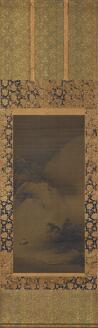
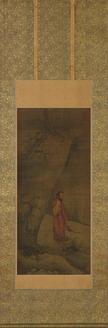
Snowy Landscape
雪景山水図軸
Paintings · Kamakura, 13th centuryTNM
Home › Browse › Paintings › Kamakura period › Five Dragons
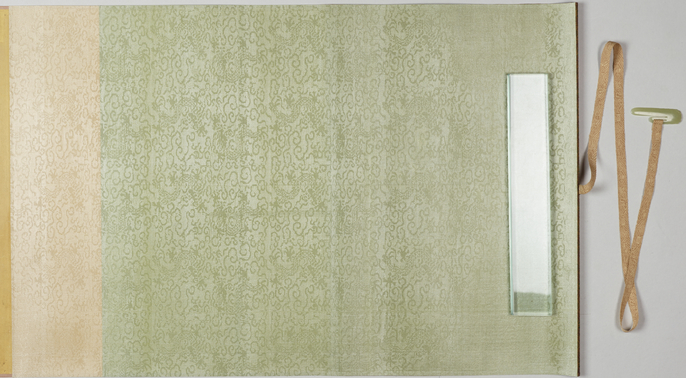
The artist of this work, Chen Rong, was a scholarly painter active in 13th-century China. He was from the coastal Southeastern region of China which is now known as Fujian Province. He was especially skilled at depicting dragons, which in China are divine beasts that stir forth clouds and bring rain. For this reason, they become one with the clouds, and it is important to depict their changing appearance. According to historical sources, in order to depict this transformation, Chen would get drunk and cover his hands in ink as he worked, with no regard for his clothing. He would scatter ink to create the clouds, and spit ink from his mouth for the mist. Chen’s wild and free dragons became the standard for future generations of painters. This work starts with violent waves caused by five dragons on the right side. The composition continues left to the dragons appearing from behind the clouds and rocks, and a raging waterfall further on the left. The rainclouds with their strong contrasts of light and dark, the powerful flow of the water, and the slithering movement of the dragons which seems to blend so well with the natural phenomena around them are all celebrated characteristics of Chen's paintings in historical sources.
The seal at the end of the scroll is also believed to be a pseudonym adopted by Chen Rong. A painting with the same composition as this Five Dragons scroll is owned by the Princeton University Art Museum in the USA. It contains a total of 12 dragons and is an exceptionally long work of over eight meters in length. Other dragon scrolls which use this composition include a work in the Metropolitan Museum of Art in New York, and a scroll owned by the Museum of Fine Arts in Boston. The connection of these four scrolls is the subject of ongoing research, although it seems that this Five Dragons Scroll used to be part of a longer scroll. Five dragons emerge from dark clouds, with the roaring waterfall at the end of the scroll representing their power to control water. Chen Rong, a scholar-painter of 13th-century China, was renowned for his depictions of dragons.
— Museum description: Tokyo National Museum (CC BY 4.0), via ColBase / Japan Search.