National Treasure
Landscape
破墨山水図
Paintings · Muromachi, 1495TNM
Home › Browse › Paintings › Muromachi period › Flowers and Birds of the Four Seasons: Summer
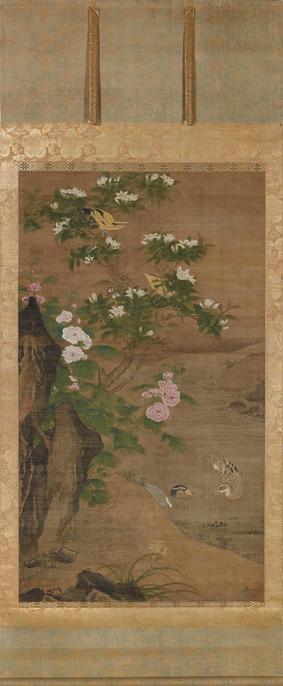
Lu Ji was a painter active in China during the middle part of the Ming dynasty in the 16th century. Known for his works depicting birds and flowers, and with the emperor being fond of his art, he was promoted to the highest level an imperial court painter could achieve. This four-panel work is recognized as Lu Ji’s masterpiece, with its depictions of the flowers and birds of spring, summer, winter, and fall. In the spring panel, mandarin ducks, pigeons, black-throated laughingthrushes, and larks are gathered in a ravine where peach blossoms have begun to bloom. In the summer panel, the landscape is filled with oddly shaped rocks, and a garden is shown filled with gardenias, hollyhocks, and daylilies. Black-naped orioles, tits, and ducks can also be found. In the fall panel, fragrant olives, cotton roses, chrysanthemums, hill mynahs, paradise flycatchers, and ruddy shelducks have been painted.
In the winter panel, the curving S shape of the waterfall makes a striking scene. Camellias and plum trees stretch their branches from the cliff, and pheasants and sparrows huddle close to keep warm. It is said that Lu Ji carefully studied the paintings of the ancient masters before developing his own unique style. His style tends to feature all kinds of elements brought together in complex arrangements, but which have been arranged logically to make a clear progression from foreground to background within the composition. Of course, the fine lines and exquisite colors he uses to depict birds and flowers were also key factors to his success. Lu Ji’s style was passed on to his grandchildren and apprentices, and his influence spread beyond China to the Korean peninsula, Japan, and even Persia.
— Museum description: Tokyo National Museum (CC BY 4.0), via ColBase / Japan Search.