National Treasure

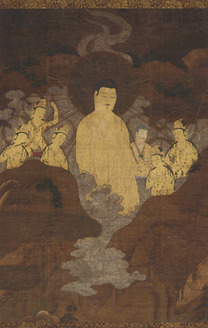
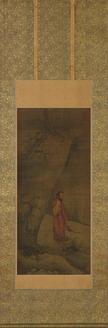
Bishamon Ten (Vaiśravaṇa), Extermination of Evil (J., Hekija-e)
辟邪絵 毘沙門天像
Paintings · Heian, 12th centuryNara NM
Home › Browse › Paintings › Kamakura period › Fugen (Samantabhadra) and Ten Rasetsunyo (Rākṣasis)

{i=>[Lotus Sutra, Saddharmapuṇḍarīka-sūtra, Fahua jing, Hoke kyō], content=>[This painting depicts the bodhisattva Fugen (Skt. Samantabhadra) and the Ten Protective Demonesses (Skt. Rākṣasīs; J. Jūrasetsunyo), who, according to the Buddhist scriptures, have vowed to watch over devotees to the , (Skt. , ; Ch. , ; J. , ). This type of image is thought to be intimately linked to beliefs surrounding the salvation of women as expounded in the sutra. The Ten Rākṣasīs are portrayed in Japanese attire, an interesting feature to this expression of the iconography.]} Fugen-bosatsu (Samantabhadra), who is riding on the back of a white elephant, and his attendants, such as two Boddhisattvas (Yakuō-bosatsu or Bhaiṣajya-raja and Yuse-bosatsu), two guardian deities (Tammon-ten or Vaiśravạna and Jikoku-ten or Dhṛtarāṣṭra) and ten Rasetsunyos (female Rākṣasas), are depicted on a cloud; the cloud is slowly moving toward a Buddhist monk who is in the process of studying the Hoke-kyō (Lotus sutra).
The ten Rasetsunyos are supposed to protect the Buddhist monks who are reciting the Hoke-kyō (Lotus sutra). In earlier paintings during the Heian period, images of ten Rasetsunyos used to be depicted in Chinese style costumes. Later on, Rasetsunyos in the Japanese style Jūni-hitoe dress, as seen in this paintings, began to be painted. The Hoke-kyō (Lotus sutra) was worshipped especially by the ladies of the high society in the Heian period, because the Hoke-kyō (Lotus sutra) was the only Buddhist scripture saying that women as well as men could go to heaven. Those ladies may have identified themselves with the Rasetsunyos attending Fugen-bosatsu.
— Museum description: Nara National Museum (CC BY 4.0), via ColBase / Japan Search.