National Treasure
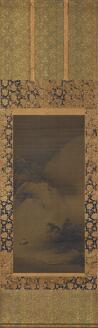
Snowy Landscape
雪景山水図軸
Paintings · Kamakura, 13th centuryTNM
Home › Browse › Paintings › Kamakura period › Insects and Bamboo
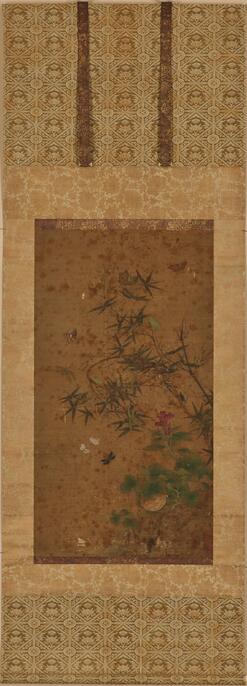
The bamboo in this work makes quite an impression, twisting grandly as it stretches upwards. All of the plants here are good omens, with bamboo symbolizing life force, gourds representing the blessing of children, and cock’s combs suggesting success in life. Intermixed with the plants and flowers are butterflies, dragonflies, grasshoppers, bell crickets, and katydids, all showing the abundant energy of the natural world. This work is attributed to Zhao Chang, a court painter of the Northern Song dynasty in the 11th century who is well known for his bird-and-flower paintings. In Chinese painting, this genre featuring plants and bugs was quite popular. The elements of this work are depicted in a manner both exceptionally realistic and finely detailed, from the gradations of color on the leaves of the gourd and the intricate petals of the flowering cock’s comb, to the tactile sense of the bugs’ legs.
This is the oldest of such “plant and insect” paintings still in existence, and is regarded as a masterpiece from the 13th century or the Southern Song dynasty. At the upper left of the work you can see a seal designating the work as property of Ashikaga Yoshinori, the sixth Muromachi shogun. This work, handled and passed down with care as an object formerly owned by the shogun, was referred to as “Zhao Chang’s Bending Bamboo.” This painting depicts three auspicious motifs: bamboos for vitality, a melon for family prosperity, and a cockscomb flower for success in life. It is said to be the oldest extant example of an insect-and-flower painting.
— Museum description: Tokyo National Museum (CC BY 4.0), via ColBase / Japan Search.