National Treasure

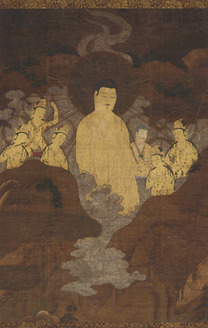
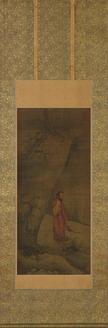
Bishamon Ten (Vaiśravaṇa), Extermination of Evil (J., Hekija-e)
辟邪絵 毘沙門天像
Paintings · Heian, 12th centuryNara NM
Home › Browse › Paintings › Kamakura period › Jizō (Kṣitigarbha)
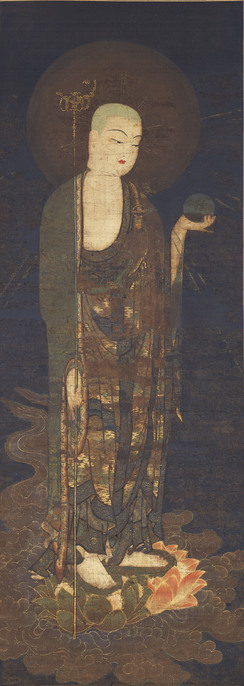
The bodhisattva Jizō (Skt. Kṣitigarbha) holds a jewel in his left hand and a priest’s staff in his right. He rides in upon a cloud with a lotus-shaped pedestal beneath each foot. This depiction is thought to show the bodhisattva coming to the rescue those suffering or in peril. {br=>[[]], content=>[In this painting, the bodhisattva Jizō (Skt. Kṣitigarbha) glides on a cloud holding a sacred jewel in the left hand and his usual attribute of a priest’s staff in the right. The figure’s feet, however, stand on two different-colored lotus pedestals to emphasize movement. Further, the bodhisattva is depicted as a tall slender youth with an elegant countenance, imbuing the work with a certain sensual attraction. The different sections of the robes were mainly painted in a shades of blue and green. They are adorned with delicate patterns created in cut gold leaf and gold paint. These elements produce a subdued grandeur that typifies Buddhist paintings from the late Kamakura period (1185–1333).
, Beginning in the Heian period (794–1185), Jizō became an important member of the accompanying retinue shown in images of the buddha Amida (Skt. Amitābha) descending to greet dying believers who would be reborn in the Pure Land. During the Kamakura period, however, Jizō rose to greater prominence as a figure capable of rescuing beings in all six realms of existence and was often painted alone in the same style, gliding down on clouds in a “welcoming descent.” Under Shinto-Buddhist combinatory thought, the bodhisattva Jizō is viewed as the Buddhist counterpart of the kami residing in the third shrine of Kasuga Taisha Shrine. Paintings related to that belief in Nara occasionally depict Jizō in this same style, suggesting this work may have been produced in a Pure Land context in Nara. ]}
— Museum description: Nara National Museum (CC BY 4.0), via ColBase / Japan Search.