National Treasure

Landscape
破墨山水図
Paintings · Muromachi, 1495TNM
Home › Browse › Paintings › Muromachi period › Landscapes of the Four Seasons

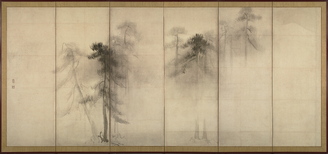
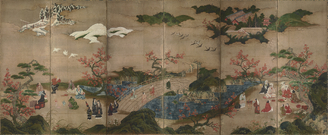
This well-executed landscape is characterized by an abundant use of colors. The seasons are depicted from right to left. This painting depicts the seasons unfurling over two folding screens. The right-hand screen shows spring through summer while the left-hand screen portrays autumn to winter. All this is expressed using different shades of ink. Seasonal landscapes are a common theme of monochrome ink paintings. This example features an imaginary landscape, though it is modelled on works depicting Lake Dongting in Hunan Province, China. A closer look reveals faint splashes of color.
People tend to think monochrome ink paintings only use ink, as the name might suggest, but many feature color like this. The coloring here imbues the human figures with a certain vitality. It is enjoyable to try locating these figures and imagining what kinds of conversations they are having. This work was painted by Yogetsu, a Zen painter-priest who lived during the late Muromachi period. It is said he was a student of the great painter Sesshu, though there is no definitive evidence. Yōgetsu studied contemporary monochrome ink paintings before developing his own unique style.
— Museum description: Tokyo National Museum (CC BY 4.0), via ColBase / Japan Search.