National Treasure

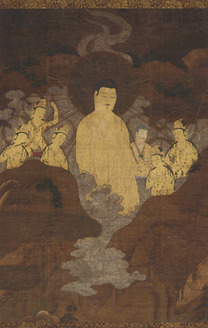
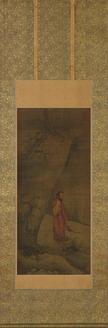
Bishamon Ten (Vaiśravaṇa), Extermination of Evil (J., Hekija-e)
辟邪絵 毘沙門天像
Paintings · Heian, 12th centuryNara NM
Home › Browse › Paintings › Kamakura period › Mandala of the Supreme Uṣṇīṣa Buddhas

{i=>[ungen zaishiki], content=>[Dainichi (Skt. Mahāvairocana) is at the center of the Mandala of the Supreme Uṣṇīṣa Buddhas (Sonshō Mandara) surrounded by the Eight Deities of the Buddha’s Crown. These are emanations of the Buddhist merit within the cranial mound of the Buddha. In the lower section of the painting, the Wisdom King Fudō Myōō (Skt. Acala) is in a triangle, and Gōzanze Myōō (Skt. Trailokyavijaya) is within a crescent. This expression of the iconography is distinguished by the exquisite uses of color seen throughout, including the technique of , , or rainbow coloring, in which distinct bands of color are applied in lighter to darker gradations to give the impression of dimensionality.]} This mandala has been used as a principal ritual object for the Sonshō-hō ritual for warding off misfortune and praying for divine favor. According to the compositional definition of this mandala in the Buddhist scriptures, eight Buddhist figures are arranged within a large disk, with the figure of Dainichi-nyorai (Mahāvairocana) as the central image.
Fudō-myō'ō (Acalanātha) is depicted below them within a red triangular section, whereas Gōzanze-myō'ō (Trailokyavijaya) is placed within a half moon-shaped section. The arrangement of smaller objects does not follow the definition in Buddhist texts but the original of its own: Flower vases placed on the large disk along its circumference are all standing upright, and the Buddhist deities on the cloud at the top of the picture are arranged in such a way that their act of flying is emphasized. The Buddhist figures have rather long faces and slender bodies. Their facial expressions are gentle. Mild colors and shading with gradation are often used. Such a delicate manner of expression reflects the painting style of the late Heian period, but, in a sense, it looks slightly weak. It is conceivable that this painting was made during the mid-Kamakura period.
— Museum description: Nara National Museum (CC BY 4.0), via ColBase / Japan Search.