National Treasure
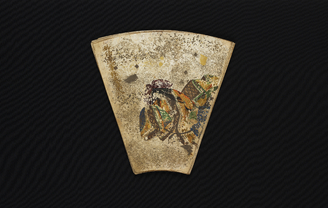
Bound Fan Papers with the Lotus Sutra
扇面法華経冊子
Paintings · Heian, 12th centuryTNM
Home › Browse › Paintings › Heian period › Scroll of Hungry Ghosts)
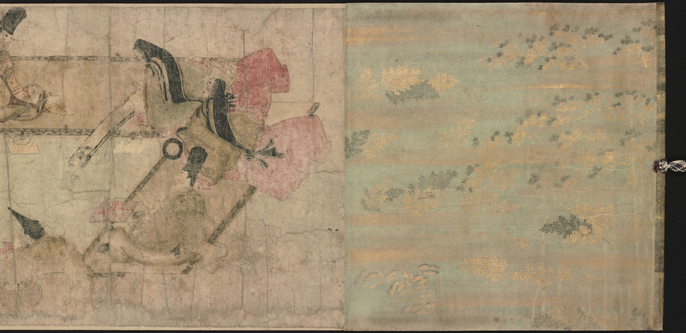
Hungry ghosts are the spirits of people who once lived lives filled with greed and evil deeds. Now they suffer from insatiable hunger and thirst in one of the realms of suffering. This illustrated scroll has its roots in the teachings of the Pure Land faith, which was popular at the end of the Heian Period. It depicts in minute detail the unearthly forms of the hungry ghosts. The scroll is based on the Shobo nenjo-kyo, or the Meditation on the Correct Teaching Sutra. It was originally passed down with a text explaining the pictures, but this was subsequently lost and there are now various opinions as to what each scene represents. Let's take a look at these scenes. In one, men and women are shown enjoying music. Small hungry ghosts are attached to their shoulders and chests. This is thought to depict people with no respect for the Buddha's teachings.
The ghosts are probably feeding on their corrupt souls. The next scene shows a birth. A hungry ghost is holding its arms out to feed on the newborn. This spirit, crawling out from the pits of hell, was once someone who tricked sick people in a previous life. A further scene shows hungry ghosts feasting on human excrement. These are the spirits of people who had previously contaminated food meant for monks. Each scene portrays the awful existence of the hungry ghosts. Perhaps these depictions caused viewers to reflect on their own lifestyles and behavior. What feelings do they rouse in you? It is thought this work was once part of the Six Paths of Transmigration, a set of paintings originally kept in the treasure house of Kyoto's Rengeo'in Temple. Commonly known as Sanjusangendo, this house was built by the cloistered emperor Goshirakawa.
— Museum description: Tokyo National Museum (CC BY 4.0), via ColBase / Japan Search.