National Treasure

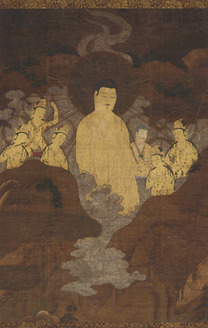
Bishamon Ten (Vaiśravaṇa), Extermination of Evil (J., Hekija-e)
辟邪絵 毘沙門天像
Paintings · Heian, 12th centuryNara NM
Home › Browse › Paintings › Kamakura period › Ten Kings of Hell

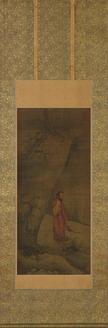
When a person dies, they encounter the Ten Kings of Hell, visiting with each of these underworld bureaucrats sequentially. The kings judge the deeds of the deceased and determine the realm where they will be reborn. The two hanging scrolls seen here are from a set of ten. They are by Lu Xinzhong (J. Riku Shinchū), a Buddhist painter active in the port city of Ningbo (Zhejiang Province). It is said that there are ten kings in hell, one of whom is Emma or Enra (Yama). They judge the dead every seventh day between the seventh day and the seventy-seventh day after death, on the hundredth day, and at the first and the third year's anniversaries of death. In China pictures with this motif painted during the tenth century are still extant. Many pieces from the Song and Yuan dynasties were brought to Japan; The works by Lu Xinzhong were the representative pieces among them.
The style of the signature in the painting introduced in this article is, though part of the signature is not visible, identical with the one in Buddha's Nirvana by Lu Xinzhong kept in the Nara National Museum. In each scroll, a king, who is sitting on a throne and is accompanied by officials, is described. In front of them, those who were found guilty are punished in several ways. The dense arrangement of objects and precise technique are notable in Lu Xinzhong's paintings. The standing screens behind the kings are decorated with landscape paintings in ink. It is interesting to imagine that those landscape paintings painted within the scene of other pictures had some influence on Japanese ink paintings.
— Museum description: Nara National Museum (CC BY 4.0), via ColBase / Japan Search.