National Treasure

Snowy Landscape
雪景山水図軸
Paintings · Kamakura, 13th centuryTNM
Home › Browse › Paintings › Kamakura period › The Bodhisattva Hannya
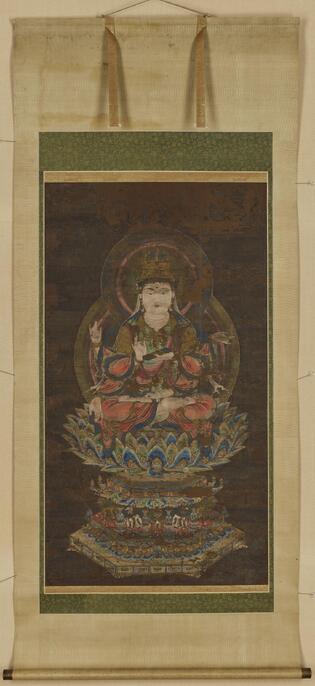
Buddhism teaches that we become Buddhas once we attain the ability to see all things correctly and understand the truth. Hannya Bosatsu is said to be the personification of this perfect wisdom. The deity is also known as Butsumo, or mother of the Buddhas, because just as how a mother begets children, so perfect wisdom begets Buddhas. Hannya Bosatsu is depicted with superhuman traits, such as six arms and a third eye on the forehead. The six hands each form a different mudra, with one of the left hands holding a folded-up book of sutras. The deity is clad in armor, though the garment sleeves are decorated with frills. The painting predominantly features cool colors like blue and green, with highlights and gradations used to convey a sense of luminosity. Each motif is demarcated clearly with thick outlines. Buddhist paintings from the Heian period use thin outlines and soft, warm color schemes, with shades of the same hues used to add more expression.
In contrast, paintings from the Kamakura period feature clearly-defined lines, with subdued, darkish tones used to lend the works a sense of lucidity. Hannya Bosatsu is unique to Esoteric Buddhism, a new school of Buddhism that arrived on Japan's shores at the start of the Heian period. She is one of the most important deities in Esoteric Buddhism. She is commonly depicted in mandalas, which depict the Esoteric Buddhist pantheon in visual form, but this very rare example depicts the deity without accompaniment. This Buddhist god is painted with great skill, his body outlined with fluid brushstrokes and his clothes decorated with intricate patterns. He represents the wisdom that leads to enlightenment, the ultimate goal in Buddhism. His six arms represent the six practices that people must follow to become enlightened.
— Museum description: Tokyo National Museum (CC BY 4.0), via ColBase / Japan Search.