National Treasure
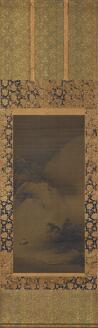
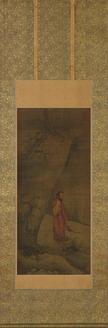
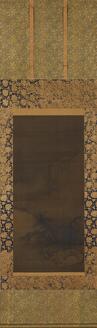
Snowy Landscape
雪景山水図軸
Paintings · Kamakura, 13th centuryTNM
Home › Browse › Paintings › Kamakura period › Two Sparrows and Plum Blossoms
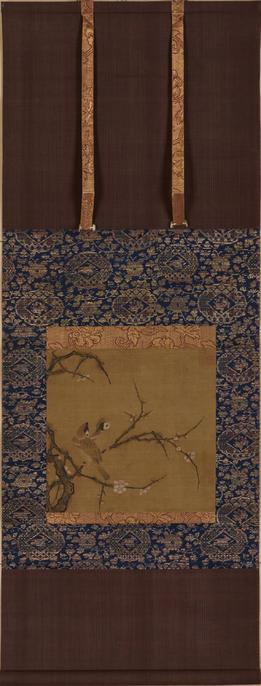
Plum trees, which blossom during the cold winter ahead of all other flowers, and sparrows, which are auspicious symbols of success, have been popular subjects for bird-and-flower paintings since ancient times. Two sparrows face each other as they rest their wings, tucked into the elegant curve of a plum branch. The beak of the sparrow in the background is slightly opened, lending it a charming quality as if it is about to speak. The plum blossoms are represented using soft, fine ink lines and layered pale white and pink. Spots of light yellow, green, and deep red are used for the stamens and calyxes. Each feather of the sparrows’ wings is meticulously depicted in fine lines of black ink and white paint. Their patterns are delicately depicted in shades including dark brown, reddish brown, and ochre. Their eyes are lightly painted in bluish-green. All are delicately depicted and could be called typical of Southern Song-dynasty (1127–1279) bird-and-flower paintings. In that sense, they lend credence to the tradition that attributes this painting to Ma Lin, a court artist who lived during this period. In comparing the depiction of the flowers and sparrows, however, it has been noted that the plum branch is rendered in thick ink lines suited to a large surface area.
For this reason, it has also been suggested that this may be a mounted piece cut from a larger painting of a whole plum tree. The seal in the upper right marks this painting as having belonged to Ashikaga Yoshinori, the sixth shogun of the Muromachi shogunate, who lived in the 15th century. A painting of almost identical size with an identical seal in its upper left is in the collection of the Gotoh Museum in Tokyo. It depicts two Daurian redstarts on a plum branch. Although these historic paintings are currently divided between the collections of the Tokyo National Museum and the Gotoh Museum, they were originally a set in the collection of the Ashikaga shoguns. The highlights of this work presumed to be by Ma Lin, a court painter of the Southern Song dynasty (1127–1279), are the delicate depictions of the subjects. The seal on the top right corner indicates that this work once belonged to the sixth shogun of the Muromachi shogunate, which lasted from 1336 to 1573.
— Museum description: Tokyo National Museum (CC BY 4.0), via ColBase / Japan Search.