Important Cultural Property
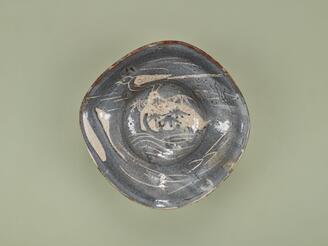
Bowl with a Wagtail
鼠志野鶺鴒文鉢
Ceramics · Azuchi-Momoyama, 1501–1700TNM
Home › Browse › Ceramics › Azuchi-Momoyama period › Water Jar, Named "Shiba no Iori (Grass Hut)"

This water jar is an example of Shigaraki ware, which was produced mainly in the southern part of modern-day Saga Prefecture. Water jars are used during tea ceremonies to store water. They are used with a lid in the tea room. The first thing to catch the eye is the crack running vertically down the jar. At first glance, this seems like a dud product; after all, surely water will leak out. In fact, these kinds of cracks and blemishes are appreciated and enjoyed in the tea ceremony. And fear not - a glimpse inside the vessel reveals that lacquer has been carefully applied to stop water leaking out. This water jar is also noteworthy for its unique appearance, caused by ash falling on it during the kiln firing process. This ash formed a natural glaze that flowed over the jar, creating the patterns you see here. Note how the colors shift beautifully from gorgeous, vitreous greens to charred reds.
Another highlight is the texture of the ground, so typical of Shigaraki ware. Shigaraki clay has a lower iron content compared to other regions, so the firing process creates a warm reddish-brown hue. Another characteristic feature is the way refined grains of feldspar and quartz dot the surface. This natural beauty, created by the interplay of clay and fire, was probably cherished as a befitting quality for a tea ceremony. This ceramic jar was used to hold water during tea gatherings. It was crafted at the Shigaraki kilns east of Kyoto. There, it was fired in a wood-burning kiln, resulting in scorch marks, cracks, and a glossy coating of melted ash. Celebrated for its complex texture and rugged form, it is considered one of the finest water jars from the Shigaraki kilns.
— Museum description: Tokyo National Museum (CC BY 4.0), via ColBase / Japan Search.


