Important Cultural Property
Bodhisattva
菩薩立像
Sculpture · Kamakura, 13th centuryTNM
Home › Browse › Sculpture › Kamakura period › The Wisdom King Aizen
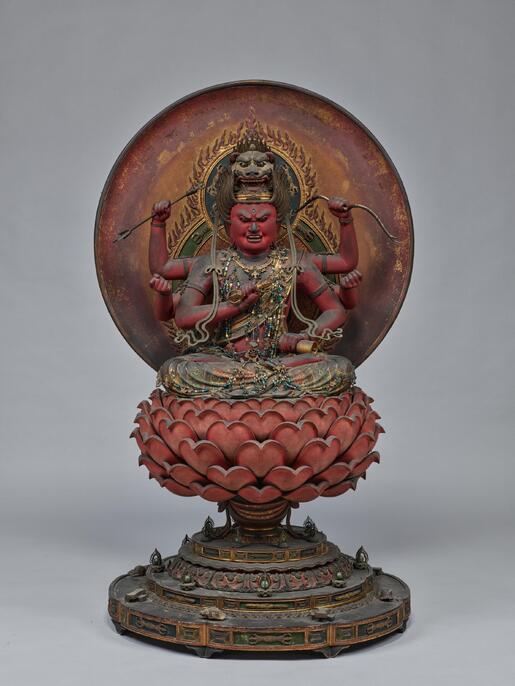
This red-bodied figure with three eyes, six arms, and a lion-head crown is Aizen Myo'o, or Ragaraja in Sanskrit. His entire countenance expresses anger, from the hair rising up like flames to the glaring eyes with raised eyebrows, and the open mouth with fangs. One may feel a special power exuding from his fierce appearance. Aizen Myo'o is known as a Buddha of love and he is widely associated with affairs of the heart. However, it was also believed he could answer a variety of other prayers, from cursing enemies to ensuring the prosperity of one's descendants. The bow and arrow he carries symbolize the fulfillment of these prayers. The hand on the center left doesn't hold anything. During Buddhist ceremonies, though, it seems people adorned the hand with items representing the subjects of their requests, such as slips of paper with names written on them. Please take a look at the pedestal of this statue.
There is a gold jar-like object at the base of this lotus pedestal. This is a treasure vase, the source of an endless supply of treasures. Shells and green wish-fulfilling jewels with flame-like ornamentation are placed around this vase. These have all spilled out from the treasure vase. If you look closely, you can see a number of colorful red, blue and green treasures trying to pour out from the mouth of the vase. This formation serves to convey Aizen Myo'o's extraordinary power to answer our prayers. Aizen is a Buddhist god associated with lust and desire. He holds a bow and arrow just like Cupid from Roman mythology. This statue of Aizen was hidden inside a miniature shrine, also on display here, and used in secret rituals. Some of these rituals aimed to transform lust into the desire for spiritual enlightenment. Others were malicious in nature, invoking Aizen to curse enemies or romantic rivals.
— Museum description: Tokyo National Museum (CC BY 4.0), via ColBase / Japan Search.