National Treasure

Buddhist Teachings for the Monk Teki Zōsu
的蔵主あて進道語
Calligraphy & Books · Nanbokuchō, 1341TNM
Home › Browse › Calligraphy & Books › Kamakura period › Letter

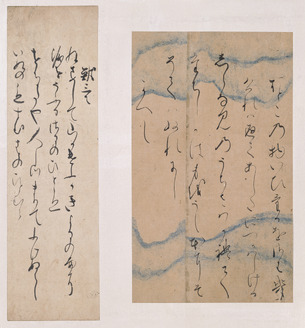
This is a letter written by Emperor Go-Fushimi (1288–1336). As the 93rd emperor of Japan, he was active in the 14th century, during the Kamakura period (1192–1333). Emperor Go-Fushimi was the son of Emperor Fushimi (1265–1317), who was known for his masterful calligraphy, a tradition that Emperor Go-Fushimi inherited. This letter tells us that Emperor Go-Fushimi made arrangements with a temple when his son joined the priesthood. First, note its size. It is written on four large sheets of paper joined together, and in loose, easy script that makes full use of that length.
It is an extravagant use of paper. Next, note the opening passage. It begins on the fifth line, which is written particularly high and large. The emperor often writes his opening passages large, and this letter is an example of that characteristic. Now, look at the writing as a whole. Emperor Go-Fushimi varies the weight of his lines while always using his brush softly. He also renders some characters in flowing, cursive script, balancing the overall composition. This letter possesses both a subtle delicacy and the dignity of an emperor’s calligraphy.
— Museum description: Tokyo National Museum (CC BY 4.0), via ColBase / Japan Search.